Understanding the Condition
What Is Peyronie's Disease?
Peyronie's disease is a fibrotic condition of the tunica albuginea in which localised scar tissue (plaque) causes penile deformity, pain during erection, and often secondary erectile dysfunction. Prevalence is estimated at 3–9% of adult men, with rates higher in men with diabetes and Dupuytren's contracture.
If you've noticed a curve developing, pain during erections, or changes in penile length or shape, you know how difficult it can be to talk about — let alone know what to do about it. The psychological impact is often as significant as the physical symptoms. Common symptoms include penile curvature ranging from mild to severe, pain especially during the early active inflammatory phase, reduced penile length or girth due to restricted elasticity, difficulty with intercourse, and in some cases erectile dysfunction.
The condition progresses through an active phase (6–18 months) of active plaque formation and pain, followed by a chronic phase of stable fixed deformity. Intervening during the active phase offers the best opportunity for meaningful non-invasive treatment. Many men are told to 'wait and see,' or are presented with invasive surgical options as though they're the only path forward. There is a meaningful middle ground — and shockwave therapy increasingly sits within it, backed by a growing body of clinical evidence.
Treating the entire penile shaft — not only the plaque — addresses co-existing vasculogenic ED and may support functional outcomes. Early treatment in the acute phase offers the greatest benefit.— Dr Kishore Bahl, Shockwave Therapy in Clinical Practice, 2026
How It Works
How Shockwave Therapy Treats Peyronie's Disease
1. Targeted Plaque Disruption
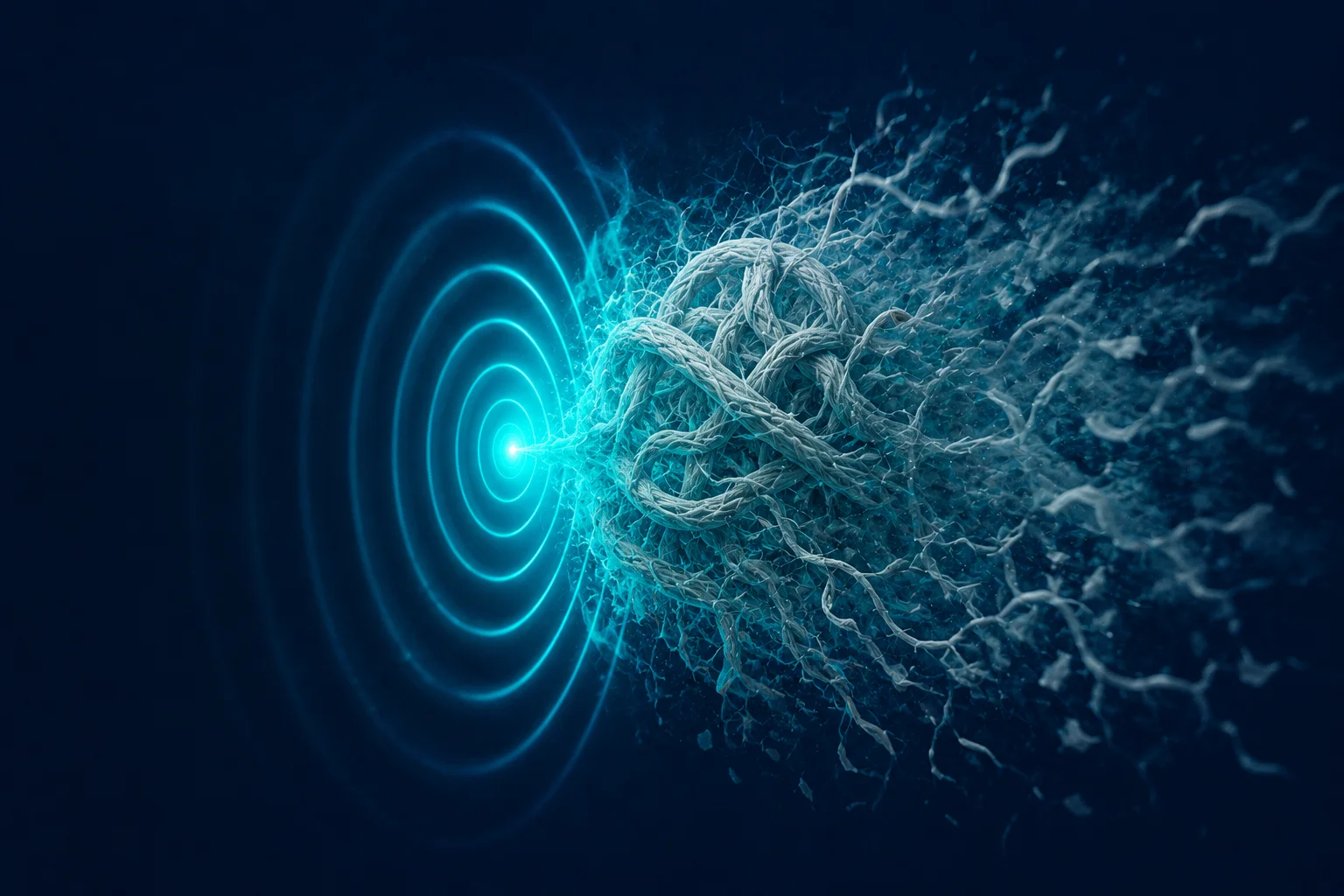
The acoustic waves create controlled micro-mechanical stress on the plaque, which may help soften and break down the fibrous collagen build-up that causes rigidity and curvature.
2. Stimulation of Angiogenesis
Shockwave energy promotes the growth of new blood vessels within the cavernous tissue, improving local circulation and supporting the tissue's natural healing mechanisms.
3. Anti-inflammatory Response
By triggering a localised biological response, LI-ESWT helps reduce the chronic inflammation driving the active phase of Peyronie's disease — directly linked to pain and ongoing plaque formation.
4. Neurogenic Pain Modulation
Shockwave therapy alters pain signalling pathways in the treated tissue, offering direct, measurable pain relief — often noticeable from the earliest sessions.
No downtime. No surgery. No anaesthetic. Each session takes approximately 15–20 minutes. Patients can resume normal activity the same day.
Our Protocol
The 75/25 Plaque-to-Corpus Protocol
Approximately 75% of treatment energy targets the plaque directly — requiring mechanical disruption of fibrous and calcified tissue. The remaining 25% treats the rest of the corpus cavernosum at lower energy. This is not arbitrary — the rationale is threefold:
- Peyronie's disease frequently co-exists with erectile dysfunction. Lower-energy shockwaves stimulate angiogenesis in the uninvolved corporeal tissue, addressing the vasculogenic ED component present in many patients.
- The degree of curvature reflects not only plaque inelasticity but the capacity of surrounding tissue to fill and expand fully. Improving vascular health of the contralateral corpus may contribute to reducing net angular deviation.
- Maintaining the health of tissue adjacent to the plaque may reduce the risk of secondary plaque formation at adjacent sites.
Source: Palmieri A et al. Eur Urol 2009;56(4):719-725 | Dr Kishore Bahl, Shockwave Therapy in Clinical Practice, 2026, Chapter 9.
Clinical Evidence
What the Evidence Actually Shows
This is where honesty matters. At Shockwave ReVibe Clinic, we do not overstate outcomes. Here is what peer-reviewed research genuinely supports.
BMC Urology Systematic Review & Meta-Analysis (2024)
7 Studies7 controlled studies, 475 patients. LI-ESWT significantly enhanced plaque reduction and curvature improvement — statistically significant across both outcomes. PubMed indexed.
Archivio Italiano di Urologia e Andrologia — 112-Patient Study
90% Pain Relief90% pain relief, mean VAS reduction of 3 points. 57.1% showed measurable curvature improvement averaging 30°. 26.2% of men with co-existing ED improved by at least 4 points on IIEF scoring.
Wang et al. — BMC Urology (2023)
p=0.0008Statistically significant pain reduction vs placebo (mean VAS difference -1.55, p=0.0008) and significant plaque size reduction. ESWT concluded safe and effective short-term treatment.
DOI: 10.1186/s12894-023-01320-8
Single-Arm Observational Study — 325 Patients
325 PatientsWeekly ESWT sessions produced statistically significant reductions in plaque size, curvature, and VAS pain scores, alongside IIEF-15 erectile function improvements.
PMC6704308
First-Line Treatment — 40-Patient Prospective Study
84% Pain Relief48% reported pain relief after the very first session. By course end, 84% of painful cases achieved significant pain reduction (VAS fell avg 2.8 points, p<0.0001).
PMID: 15735375
How Shockwave Therapy Compares to Other Options
| Approach | Pain Relief | Curvature | Invasiveness | Evidence & Role |
|---|---|---|---|---|
| Watchful waiting | None | None | None | Standard for stable, mild cases. Does not prevent progression in acute phase. |
| Oral medication | Minimal | Minimal | None | Multiple RCTs show little to no benefit for curvature. Some evidence for early-phase pain. |
| Collagenase injections (Xiapex) | Moderate | Moderate (≥30° curvature) | Moderate — repeated injections | Only licensed non-surgical option for significant curvature. Expensive. Corporal rupture risk. |
| Shockwave Therapy (Li-ESWT) | Strong — 90% pain relief | Moderate — 57% improved, mean 30° | None — non-invasive | Pain reduction most consistently supported outcome. Early phase intervention. Combines with PRP. |
| Traction therapy | Minimal | Moderate with sustained use | None — time commitment | Evidence emerging for combined use. Poor adherence limits utility. |
| Surgery | Effective | Most effective for severe curvature | High — surgical recovery | Reserved for stable chronic disease, ≥30° curvature, failed non-surgical options. Shortening/sensation risk. |
| Shockwave + PRP combined | Strong | Potentially superior to shockwave alone | Low — injection only | 2024 ICS data suggests additive benefit, particularly for curvature and quality-of-life. |
Source: Dr Kishore Bahl, Shockwave Therapy in Clinical Practice, 2026. Chapter 9, Table 10.
What We Offer
Treatments Offered at Shockwave ReVibe Clinic Under Dr Bahl
Dr Bahl takes an individualised, multi-modality approach. Treatment is never one-size-fits-all — it is structured around your specific stage of disease, symptom profile, and goals.
LI-ESWT for Peyronie's Disease
The cornerstone treatment. Protocols adapted based on plaque size, location, and calcification presence.
Shockwave Therapy for ED
Peyronie's and ED frequently co-exist. Dr Bahl assesses erectile function as part of initial consultation.
Comprehensive Initial Assessment
Disease phase (active vs stable), curvature severity, pain history, erectile function — before any treatment begins.
Ongoing Progress Review
Outcomes tracked objectively at defined intervals, protocols adjusted as needed.
The effectiveness of shockwave therapy for Peyronie's disease is closely tied to treatment protocol — energy settings, number of shocks, session frequency, and precise targeting of the plaque. Dr Bahl's experience means these parameters are optimised for each patient rather than applied generically.— Why specialist-led care makes a difference

Focal shockwave is the most mechanistically precise non-surgical treatment for Peyronie's disease. By delivering targeted acoustic energy directly to the plaque, we can interrupt fibrosis and restore function in ways that no oral treatment or injection can achieve.

Got questions?
Frequently Asked Questions
From Our Blog
Evidence-based articles on Peyronie's disease and men's health from our clinical team.
Peyronie's Disease • May 2026
Shockwave Therapy for Peyronie's Disease: What the Evidence Actually Shows
Clinical trial results on reducing penile curvature and plaque with non-invasive shockwave treatment.
Read article →Post-Prostatectomy ED • June 2026
Shockwave Therapy After Prostatectomy: Why Early Rehabilitation Matters
Peyronie's disease frequently develops post-prostatectomy. Understanding how shockwave therapy addresses both conditions simultaneously.
Read article →Chronic Prostatitis • May 2026
Chronic Prostatitis and Shockwave Therapy: What the Evidence Shows
Chronic pelvic pain syndrome frequently co-presents with Peyronie's disease and ED. Dr Bahl's approach to the whole clinical picture.
Read article →Don't Wait — Early Treatment Offers the Best Results
If you're in the active phase of Peyronie's disease — noticing new curvature, pain, or changes in shape — focal shockwave therapy at Shockwave ReVibe Clinic offers a non-surgical path forward, backed by genuine clinical evidence. Every consultation is conducted personally by Dr Kishore Bahl, in complete confidence.
Book a ConsultationBy booking an appointment you agree to our Privacy Policy
Find Us on Google
Serving Notting Hill, Kensington, Chelsea, Bayswater, Holland Park and across West London.
Share your experience — your review helps others find our clinic.