
The Condition
What Is Chronic Pelvic Pain Syndrome?
Chronic Pelvic Pain Syndrome (CPPS) — also known as chronic nonbacterial prostatitis or Category III prostatitis — is characterised by persistent pain in the pelvic region lasting more than three months, in the absence of a confirmed bacterial infection. It is the most common urological diagnosis in men under 50, accounting for approximately 90% of all prostatitis diagnoses.
Despite its prevalence, CPPS is frequently misdiagnosed, undertreated, or dismissed. Many men are prescribed repeated courses of antibiotics that are ineffective (because the condition is not bacterial), or told that nothing can be done. This is incorrect — and increasingly outdated. Focal shockwave therapy has demonstrated significant clinical efficacy for CPPS in multiple published studies.
The NIH-CPSI (Chronic Prostatitis Symptom Index) is the validated clinical tool used to assess CPPS severity across three domains: pain, urinary symptoms, and quality of life. Dr Bahl uses this scoring system as part of his clinical assessment — providing a baseline measurement and tracking improvement over the course of treatment.
Most men with CPPS have been through years of ineffective treatment before finding shockwave therapy. The evidence for focal shockwave in this condition is compelling — and the clinical results reflect that.— Dr Kishore Bahl
Recognising CPPS
Symptoms of Chronic Pelvic Pain Syndrome
CPPS presents differently in different men. The NIH-CPSI classifies symptoms across three domains — pain, urinary function, and quality of life. All three are assessed in Dr Bahl's consultation.
Pain Symptoms
- Persistent pain or discomfort in the perineum (between scrotum and anus)
- Pain in the lower abdomen or suprapubic area
- Testicular or scrotal pain
- Pain at the tip of the penis
- Pain during or after ejaculation
- Discomfort when sitting for extended periods
- Lower back pain with no spinal cause
Urinary & Other Symptoms
- Urinary urgency or frequency
- Incomplete emptying of the bladder
- Weak or interrupted urine flow
- Pain or burning on urination
- Reduced sexual desire or erectile difficulties
- Fatigue and reduced quality of life
- Anxiety and depression secondary to chronic pain
CPPS symptoms overlap with other urological conditions. Dr Bahl's assessment includes clinical examination and relevant investigations to confirm the diagnosis and rule out other causes before treatment begins.
The Evidence
What the Research Shows
Focal shockwave therapy for CPPS is supported by multiple published clinical studies. The evidence base is among the strongest of any non-surgical intervention for this condition.
Key RCT — Zimmermann et al., 2018
78%A randomised controlled trial of focal shockwave therapy for CPPS showed that 78% of patients reported significant improvement in NIH-CPSI scores. The treatment was well tolerated with no serious adverse events reported.
Mechanism of Action
4 pathwaysFocal shockwave therapy addresses CPPS through multiple mechanisms: stimulating new blood vessel formation in chronically ischaemic tissue, breaking down calcifications and trigger points in the pelvic floor musculature, reducing inflammation, and promoting tissue repair at a cellular level.
Clinical Classification
IIIa / IIIbCPPS is classified as Category IIIa (inflammatory) or IIIb (non-inflammatory) under the NIH classification system. Focal shockwave therapy shows efficacy across both subtypes. Dr Bahl assesses which subtype is present as part of the initial clinical evaluation.
Focal shockwave therapy is recognised as an effective treatment option for CPPS in the urological literature. The non-invasive nature, absence of systemic side effects, and strong patient response rates make it a compelling first-line intervention for men who have not responded to antibiotic therapy. For a full breakdown of the causes of CPPS, why antibiotics fail, and the complete clinical evidence, read Dr Bahl's specialist's guide to CPPS.
The Treatment
Focal Shockwave Therapy for CPPS
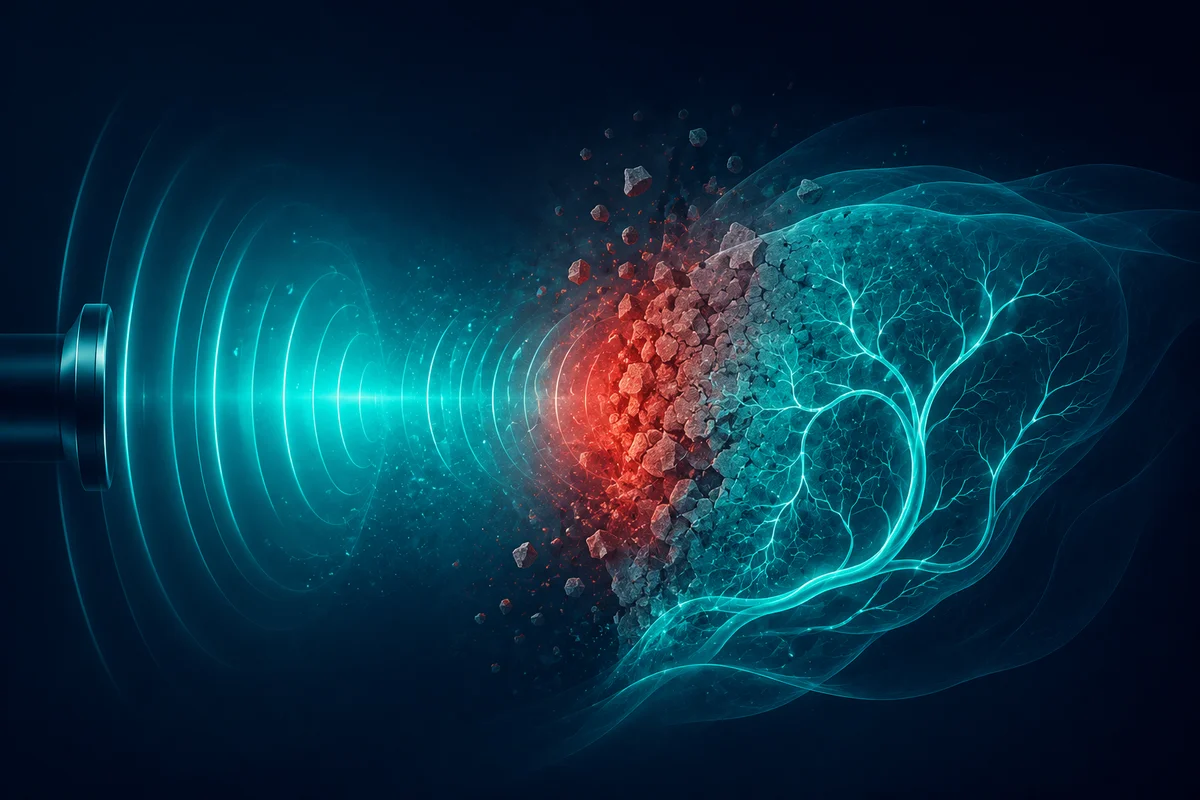
Focal shockwave therapy delivers precisely targeted acoustic energy waves to the pelvic region — stimulating the body's own biological repair mechanisms at the site of dysfunction. Unlike radial shockwave devices, focal shockwave penetrates to depths of up to 12cm, reaching deep pelvic structures that superficial devices cannot access.
Treatment Protocol
- Typically 6-8 sessions
- Sessions delivered weekly or bi-weekly
- Each session approximately 20-30 minutes
- No anaesthesia required
- No downtime — patients return to normal activity immediately
- NIH-CPSI score assessed at baseline and after treatment to track improvement
Standard Treatment vs Focal Shockwave
| Standard Approach ❌ | Focal Shockwave (Revibe) ✅ |
|---|---|
| Repeated antibiotics (often ineffective for CPPS) | Targets the tissue-level cause directly |
| Alpha-blockers — symptomatic relief only | Stimulates biological repair, not just symptom relief |
| No change to underlying pathology | Promotes new blood vessel growth and tissue regeneration |
| Long-term medication dependence | Finite course — typically 6-8 sessions |
| Systemic side effects | No systemic side effects — localised treatment |
| Surgery — significant risks and recovery | Non-invasive — no surgery, no anaesthesia, no downtime |
For select cases, Dr Bahl may recommend combining shockwave therapy with PRP therapy to further support tissue repair and enhance clinical outcomes.
The Process
Your CPPS Treatment Journey
A structured, clinically-led pathway from assessment to measurable improvement.
01 · Clinical Assessment
Dr Bahl takes a detailed urological and symptom history. NIH-CPSI scoring is completed at baseline to quantify symptom severity across pain, urinary function, and quality of life domains. Clinical examination is performed as indicated.
02 · Differential Diagnosis
CPPS symptoms overlap with other urological conditions including bacterial prostatitis, urethral stricture, and bladder pathology. Dr Bahl's assessment includes relevant investigations to confirm the CPPS diagnosis and rule out other causes before treatment begins.
03 · Shockwave Treatment Course
A personalised treatment protocol is prescribed based on clinical findings. Typically 6-8 focal shockwave sessions, delivered weekly or bi-weekly at the clinic. Each session takes approximately 20-30 minutes. Dr Bahl delivers every treatment personally.
04 · Progress Assessment
NIH-CPSI scores are re-assessed during and after the treatment course to track improvement objectively. Treatment protocol is adjusted based on clinical response. Follow-up consultations ensure sustained improvement.
Clinical Measurement
How We Measure Improvement — The NIH-CPSI
The NIH Chronic Prostatitis Symptom Index (NIH-CPSI) is the internationally validated tool for assessing CPPS severity. It measures three domains — pain, urinary symptoms, and quality of life — giving a total score out of 43. Dr Bahl uses this tool at baseline and throughout treatment to track improvement objectively.
Pain Domain
Score range 0–21Measures location, frequency, and severity of pelvic pain. The pain domain is typically the most significantly affected and shows the greatest response to shockwave therapy.
Urinary Symptoms Domain
Score range 0–10Assesses urinary urgency, frequency, and incomplete emptying. Urinary symptoms frequently improve alongside pain reduction following shockwave treatment.
Quality of Life Domain
Score range 0–12Measures the impact of symptoms on daily life, work, and wellbeing. Quality of life scores typically show the most dramatic improvement as pain and urinary symptoms resolve.
A reduction of 6 or more points on the total NIH-CPSI score is considered clinically meaningful. In the Zimmermann 2018 RCT, 78% of patients achieved this threshold following focal shockwave therapy.
Why Shockwave ReVibe Clinic
Built on Precision, Evidence and Specialist Care
Focal — Not Radial
Shockwave ReVibe Clinic uses true focal shockwave technology — the device validated in the published CPPS clinical studies. Radial devices cannot penetrate to the depths required for pelvic treatment and are not validated for CPPS. Only focal shockwave delivers energy to 12cm depth — where it is needed.
Specialist Urologist
CPPS is a urological condition — and Dr Bahl is a Specialist Grade Doctor in Urology with 15 years of urological experience. Every consultation and treatment is delivered personally by Dr Bahl. No delegation to junior clinicians or physiotherapists.
Evidence-Based Protocol
Treatment protocols at Shockwave ReVibe Clinic are based on the published clinical literature, including the parameters used in the Zimmermann 2018 RCT. NIH-CPSI scoring is used to track outcomes objectively throughout the treatment course.
Non-Invasive, No Downtime
Focal shockwave therapy for CPPS is completely non-invasive. No surgery, no anaesthesia, no systemic medication. Patients leave the clinic immediately after each session and return to normal activity without restriction.
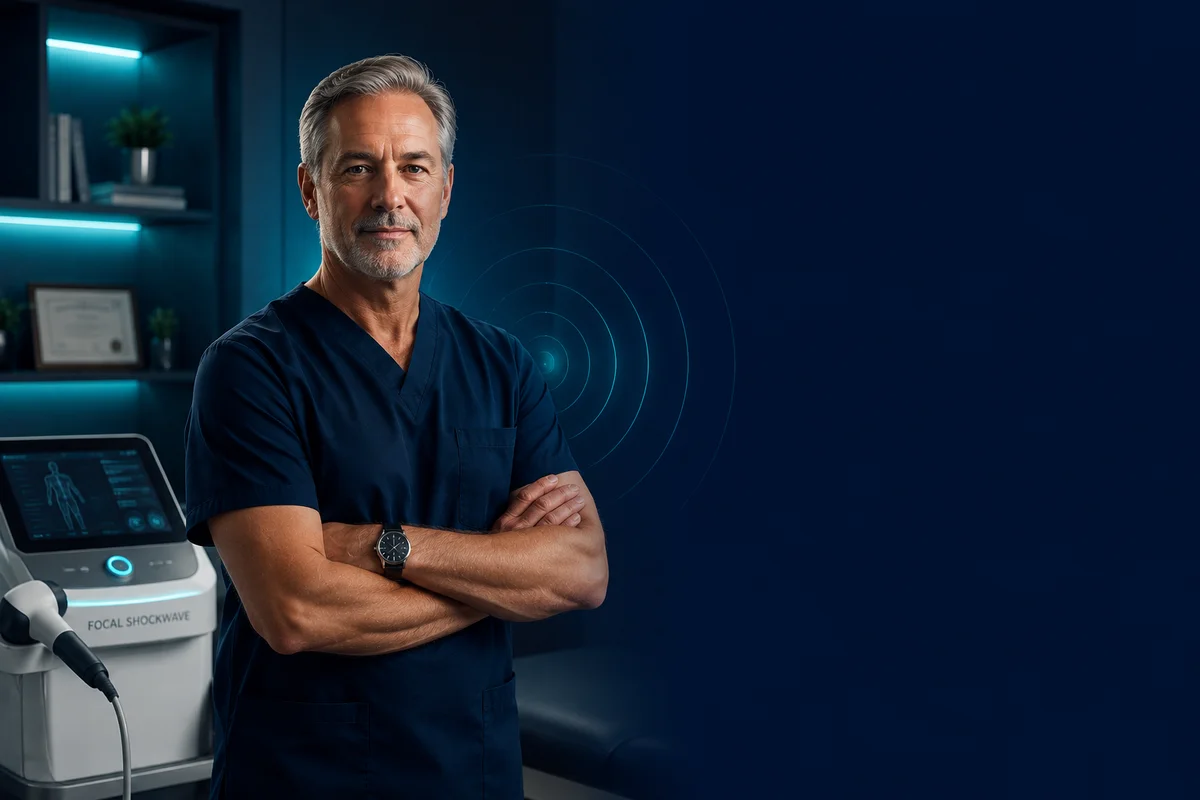
Chronic pelvic pain is one of the most under-recognised conditions in men's health — not because it can't be treated, but because so many men are told nothing more can be done. Focal shockwave therapy changes that conversation.

Got questions?
Frequently Asked Questions
You Don't Have to Live With Pelvic Pain.
Focal shockwave therapy for CPPS — clinically proven, non-invasive, delivered personally by Dr Kishore Bahl, Specialist Grade Urologist. No referral needed.
📍 22 Notting Hill Gate, London W11 3JE · Clinically proven · Drug-free · GMC-registered
Not sure this is the right fit? Start with a Men's Urology Consultation.
By booking an appointment you agree to our Privacy Policy
Find Us on Google
Share your experience — your review helps others find our clinic.