
UNDERSTANDING RECOVERY
Why Erectile Function Doesn't Always Return After Prostate Surgery
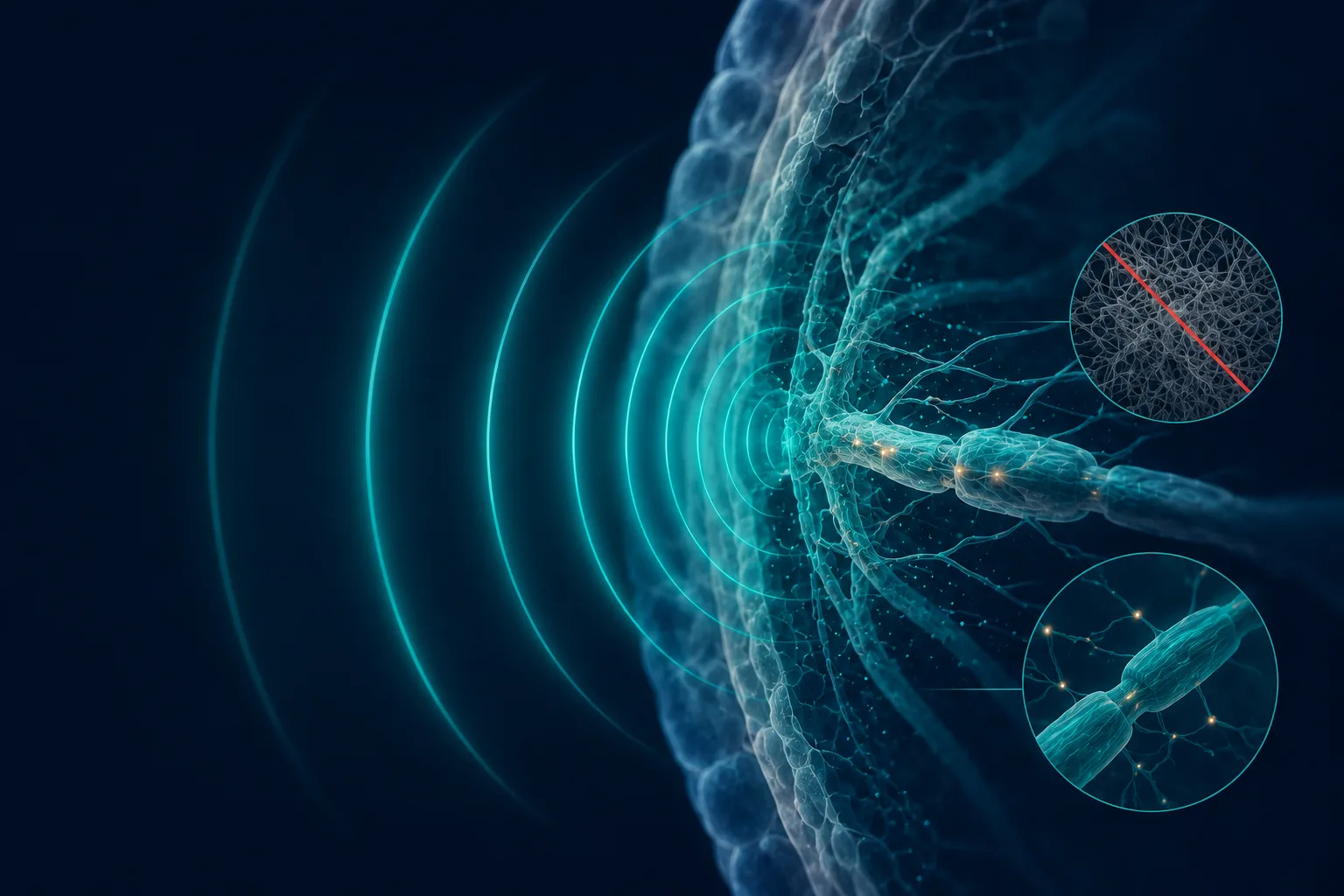
Post-prostatectomy erectile dysfunction has a specific, well-understood biological cause. The cavernous nerves — which carry the parasympathetic signals that trigger nitric oxide release and smooth muscle relaxation — run in tight proximity to the prostate on both sides. During radical prostatectomy, even with nerve-sparing techniques, these nerves are inevitably subjected to traction, thermal, and ischaemic injury. They do not sever, but they are damaged.
The consequences unfold in two parallel processes. In the early weeks after surgery, the nerves are stunned but structurally intact — a state called neuropraxia. Neural signalling fails temporarily, and without regular oxygenation from nocturnal and spontaneous erections, the erectile tissue is starved of oxygen. If this state continues without intervention, it progresses to cavernous hypoxia — the smooth muscle cells of the corpus cavernosum become persistently hypoxic, which triggers a fibrotic transformation: pathological scarring identical to that seen in other connective tissue disorders.
If untreated, smooth muscle is progressively replaced by collagen. The tissue that enables erection becomes rigid and fibrotic. Penile shortening can occur. Recovery of spontaneous erectile function becomes significantly less likely. This is why early intervention matters profoundly — the window for effective penile rehabilitation is not indefinite.
The clinical observation is direct: if untreated, smooth muscle is progressively replaced by collagen. The tissue that enables erection becomes rigid and fibrotic, and recovery of spontaneous erection becomes significantly less likely.— Dr Kishore Bahl, Shockwave Therapy in Clinical Practice, 2026
THE RECOVERY WINDOW
The Three Stages of Post-Prostatectomy Recovery
Stage 1 — Neuropraxia
Weeks after surgeryThe cavernous nerves are stunned but structurally intact. Neural signalling fails temporarily. Without regular oxygenation from nocturnal erections, the erectile tissue is starved of oxygen.
Stage 2 — Cavernous Hypoxia
Months without interventionAbsent erections mean smooth muscle cells of the corpus cavernosum become persistently hypoxic. This triggers fibrotic transformation — pathological scarring identical to that seen in other connective tissue disorders.
Stage 3 — Structural Remodelling
Progressive without treatmentIf untreated, smooth muscle is progressively replaced by collagen. The tissue that enables erection becomes rigid and fibrotic. Penile shortening can occur. Recovery of spontaneous erection becomes significantly less likely.
Source: Dr Kishore Bahl — Shockwave Therapy in Clinical Practice, 2026. Chapter 7, Table 8.
HOW IT WORKS
How Focal Shockwave Therapy Supports Recovery
1 · Active biological intervention
Unlike PDE5 inhibitors, which only work when medication is active and require functional nitric oxide signalling that may be temporarily absent post-surgery, focal shockwave therapy works directly on the tissue itself. It does not require the cavernous nerves to already be functioning — it works to support the recovery process at the cellular level.
2 · Preventing fibrotic transformation
Shockwave therapy acts upstream — stimulating the biological machinery that generates the erectile signal, reducing fibrotic degeneration in the cavernous tissue, and acting as a neurotrophic stimulus in the peri-neural environment of the cavernous nerves. This directly addresses the Stage 2 hypoxia-to-fibrosis pathway — the central biological process that determines whether recovery is possible.
3 · Supporting nerve recovery
Post-prostatectomy penile rehabilitation requires urological expertise: knowledge of the surgery performed (nerve-sparing vs non-nerve-sparing), timing post-operatively, assessment of pre-surgical erectile function, and realistic counselling about expectations. A specialist determines whether the neurogenic or vascular component predominates and adjusts the protocol accordingly. The window for effective rehabilitation is finite — waiting narrows options.
FIND OUT IF IT'S FOR YOU
Is Penile Rehabilitation Right for You?
Suitable for:
- Men who have recently undergone radical prostatectomy (nerve-sparing or non-nerve-sparing)
- Men scheduled for prostatectomy seeking to understand the rehabilitation pathway in advance
- Men experiencing absent or reduced spontaneous erections following prostate surgery
- Patients whose PDE5 inhibitors are not yet effective post-surgery (common in early recovery)
- Men at any stage post-surgery — earlier is better, but later stages can still benefit
What to Expect
-
1Consultation — Full urological assessment with Dr Bahl. Review of surgical details (nerve-sparing status), timing since surgery, pre-surgical erectile function, and current symptoms.
-
2Protocol design — Dr Bahl determines whether neurogenic or vascular factors predominate and selects the appropriate treatment approach.
-
3Treatment sessions — Focal shockwave therapy, 20 minutes per session, no anaesthetic required.
-
4Realistic expectation-setting — Dr Bahl provides honest counselling on likely outcomes based on your specific surgical history and timing.
-
5Progress monitoring — Response tracked over the treatment course, with protocol adjustments as needed.
-
6Ongoing support — For patients further from surgery, continued assessment of whether rehabilitation, combination therapy, or referral is most appropriate.

Post-prostatectomy ED requires active rehabilitation, begun early. Shockwave therapy offers a biologically active intervention that works on the tissue itself — not merely compensating for its failure.
Got questions?
Frequently Asked Questions
From Our Blog
Evidence-based articles on penile rehabilitation, shockwave therapy, and men's health from our clinical team.
Penile Rehabilitation • June 2026
Shockwave Therapy After Prostatectomy: Why Early Rehabilitation Matters
Understanding the biological window for penile rehabilitation and how focal shockwave supports post-surgical recovery.
Read article →Erectile Dysfunction • June 2026
Does Shockwave Therapy Work for Erectile Dysfunction? The Evidence Reviewed
Post-prostatectomy ED and vasculogenic ED share treatments. What 14 RCTs and 833 patients tell us about outcomes.
Read article →Diabetic ED • May 2026
Erectile Dysfunction in Diabetes: Why Pills Fail & How Focal Shockwave Helps
Diabetic men undergoing prostate treatment face compounded vascular risk. Dr Bahl explains the overlapping mechanisms.
Read article →The Recovery Window Is Open Now — Don't Wait to Find Out How Long
If you have recently undergone prostate surgery, or are scheduled for one, the timing of penile rehabilitation matters more than most men realise. Focal shockwave therapy at Shockwave ReVibe Clinic offers an active, evidence-informed approach to supporting your recovery — delivered personally by a Specialist Grade Doctor in Urology, in complete confidence.
Book a ConsultationBy booking an appointment you agree to our Privacy Policy
Find Us on Google
Serving Notting Hill, Kensington, Chelsea, Bayswater, Holland Park and across West London.
Share your experience — your review helps others find our clinic.